Impedance Testing for Beginners: A Simple Guide to Understanding Signal BehaviorAuthor : Adrian September 01,cvp-390 solder paste datasheet 2025Table of ContentsIf you're new to electronics and wondering what impedance testing is all about, you're in the right place. Impedance testing is a method used to measure how much a circuit resists the flow of alternating current (AC). It’s a key concept for understanding signal behavior in electronic designs, ensuring your circuits work efficiently without signal loss or distortion. In this guide, we'll break down impedance testing basics, explain what is impedance, dive into AC impedance explained, and walk you through impedance measurement for dummieswith simple impedance testing circuits. Let’s get started with everything you need to know, step by step.
What Is Impedance? A Beginner-Friendly ExplanationImpedance might sound like a complex term, but it’s quite simple once you break it down. In the world of electronics, impedance is the total opposition a circuit offers to the flow of alternating current (AC). Unlike resistance, which only applies to direct current (DC) and is a straightforward measure of opposition, impedance includes both resistance and reactance. Reactance comes from components like capacitors and inductors, which behave differently with AC signals due to their ability to store and release energy. To put it in numbers, impedance (Z) is often expressed in ohms (Ω) and can be calculated using the formula: Z = √(R2 + (X_L - X_C)2) Here, R is resistance, X_L is inductive reactance, and X_C is capacitive reactance. Don’t worry if this formula looks intimidating—we’ll explain how it works in practical terms later. For now, just know that impedance affects how signals travel through your circuit, impacting everything from audio systems to high-speed digital designs.
Why Impedance Testing Matters in ElectronicsImpedance testing is critical because mismatched impedance can lead to signal reflections, power loss, and poor performance in your circuits. Imagine sending a signal through a cable to a speaker. If the impedance of the cable doesn’t match the speaker, part of the signal bounces back, causing distortion or reduced sound quality. In high-speed circuits, like those in modern computers, improper impedance can result in data errors or slower performance. For example, in a typical audio system, speakers often have an impedance of 4 to 8 ohms. If your amplifier isn’t matched to this range, you might lose up to 50% of the power output, leading to weaker sound. In PCB design, controlled impedance is vital for traces carrying high-frequency signals, often requiring values like 50 ohms or 75 ohms to prevent signal degradation. By understanding and testing impedance, you can ensure your designs deliver signals efficiently, whether you’re working on a simple hobby project or a complex industrial system.
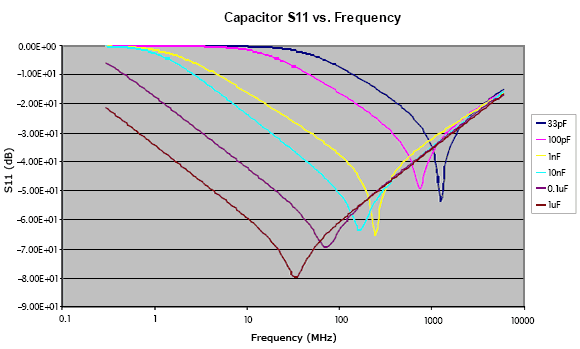
AC Impedance Explained: How It Differs from DC ResistanceOne of the biggest hurdles for beginners is understanding the difference between AC impedance and DC resistance. Resistance is a static value—it’s the opposition to current flow in a DC circuit, and it’s measured with a simple multimeter. Impedance, on the other hand, is dynamic and applies to AC circuits where the current changes direction constantly. In an AC circuit, components like capacitors and inductors introduce reactance, which depends on the frequency of the signal. For instance, a capacitor’s impedance decreases as frequency increases, while an inductor’s impedance increases with frequency. This means a circuit’s impedance can vary depending on whether the signal is at 60 Hz (like household power) or 1 GHz (like wireless communications). Here’s a quick example: A capacitor with a value of 1 μF has an impedance of about 2.65 kΩ at 60 Hz, but at 1 MHz, its impedance drops to just 0.16 Ω. This frequency-dependent behavior is why AC impedance testing is so important for designing circuits that handle varying signal speeds.
Impedance Measurement for Dummies: Tools and TechniquesNow that you understand what impedance is, let’s talk about how to measure it. Impedance measurement doesn’t have to be complicated, even for beginners. With the right tools and techniques, you can get accurate readings to ensure your circuits are performing as expected. Tools You’ll Need
Basic Steps for Impedance Measurement
Simple Impedance Testing Circuits for BeginnersLet’s put theory into practice with a couple of easy circuits you can build to understand impedance testing. These hands-on examples will help solidify your knowledge and give you practical experience. Circuit 1: Basic RC CircuitAn RC circuit (resistor and capacitor in series) is a great starting point for learning about impedance. Here’s how to build and test it:
This circuit shows how impedance combines resistance and capacitive reactance, and you’ll see how the signal behaves differently across the components. Circuit 2: RL CircuitAn RL circuit (resistor and inductor) demonstrates inductive reactance. Here’s the setup:
This setup helps you see how inductors oppose changes in current, affecting signal behavior at different frequencies.
Understanding Signal Behavior Through Impedance TestingImpedance directly impacts how signals behave in a circuit. By testing impedance, you can predict and troubleshoot issues like signal loss, distortion, or delay. Here are a few key ways impedance affects signal behavior:
By regularly testing impedance during design and prototyping, you can fine-tune your circuits to handle signals effectively, ensuring reliable performance.
Common Mistakes to Avoid in Impedance TestingAs a beginner, it’s easy to make mistakes when testing impedance. Here are some pitfalls to watch out for:
By being mindful of these issues, you’ll get more accurate data and avoid costly redesigns.
Tips for Effective Impedance Testing in PCB DesignFor those working on printed circuit boards, impedance control is especially important. High-speed signals on a PCB require precise impedance matching to prevent signal integrity issues. Here are some practical tips:
Conclusion: Mastering Impedance Testing BasicsImpedance testing might seem daunting at first, but with the right knowledge and tools, it becomes a straightforward process. By understanding what is impedance, diving into AC impedance explained, and practicing with simple impedance testing circuits, you can ensure your circuits handle signals effectively. Whether you’re a hobbyist or an aspiring engineer, mastering impedance measurement for dummieswill help you build better, more reliable designs. Start small with basic circuits and measurements, then scale up as you gain confidence. With the tips and techniques covered in this guide, you’re well on your way to tackling impedance testing basicsand improving signal behavior in your projects. Keep experimenting, keep learning, and watch your electronics skills grow! Share · · · · The Role of Flux in PCB Wave Soldering: Selection, Application, and Residue RemovalMarch 16, 2026PCB wave soldering flux types include rosin, water-soluble, and no-clean options with varying activity levels for oxide removal and solder flow. This guide covers selection criteria, spray foam drop-jet application methods, residue removal processes, and alternatives like nitrogen blanketing to boost joint reliability and yields for engineers. Article Achieving Uniform Solder Fillets in PCB Wave Soldering: Process ControlMarch 16, 2026Achieve uniform solder fillets in PCB wave soldering with process control strategies. Optimize flux, preheat, wave height, conveyor speed for consistent fillet shape, height, and wetting balance. Includes visual inspection tips and troubleshooting for reliable through-hole assemblies. Boost quality in production. Article Optimizing Conveyor Speed for Efficient PCB Wave SolderingMarch 16, 2026Learn PCB wave soldering conveyor speed calculation to manage dwell time, immersion depth, and throughput effectively. Electric engineers get practical steps, best practices, and troubleshooting tips for higher process efficiency and fewer defects in wave soldering operations. Article Understanding IPC Standards for PCB Surface Finishes: Ensuring Quality and ComplianceMarch 11, 2026Understand IPC standards IPC 4552 ENIG and IPC 4553 immersion silver for PCB surface finishes. Ensure compliance, enhance solderability, and prevent common defects to achieve reliable, high quality circuit boards. Article Miniaturization Challenges in PCB AssemblyMarch 11, 2026Navigate the complexities of high density interconnect PCB assembly and precise component placement. Learn to tackle miniaturization challenges, from tiny part handling to thermal stress, ensuring robust and reliable electronics. Article High Speed Routing Techniques: PCBMarch 11, 2026Master high speed routing in PCBs to ensure signal integrity and minimize electromagnetic interference. Learn essential techniques for robust designs, from controlled impedance to differential pair strategies. Prevent performance issues and achieve reliable electronics. ArticleGet Instant PCB |